Vaccine Questions
Looking for a specific answer?
Start with existing explainers on autism, HPV, side effects, Yellow Card reports, safety signals and how vaccine safety is monitored.
Browse Vaccine Questions →Clear explanations of vaccine claims, controversies, safety information and changing evidence—without political or ideological framing.
It is a neutral evidence-literacy project examining vaccine claims, controversies and safety data without slogans or tribal framing. It helps readers understand what evidence can—and cannot—show and links to identifiable and primary sources wherever practical.
Use a question for a direct answer, the Claim Library for a quick evidence status, or an update for dated source material.
A short introduction to reading evidence, identifying claims, understanding safety signals and seeing how scientific consensus forms.
Start with existing explainers on autism, HPV, side effects, Yellow Card reports, safety signals and how vaccine safety is monitored.
Browse Vaccine Questions →Review concise evidence statuses for 20 common vaccine and evidence claims, with links to fuller explanations and source trails.
Explore the Claim Library →Read summaries already tracked by the site, including regulator statements, surveillance information, position papers and outbreak developments.
Read Evidence Updates →Each visual pathway starts from a different reader need: checking a claim, understanding risk, or following how a controversy developed. Together they help readers move from a headline or concern to evidence, context and a fuller source trail.
Check the question, source, design, population, result, uncertainty and wider evidence before accepting a conclusion.
Read the guide →Clarify recurring mistakes about timing, causation, safety signals, report counts, single studies and statistical significance.
Review the misunderstandings →Work from the research question and methods through results, bias, applicability and the wider evidence base.
Read a study critically →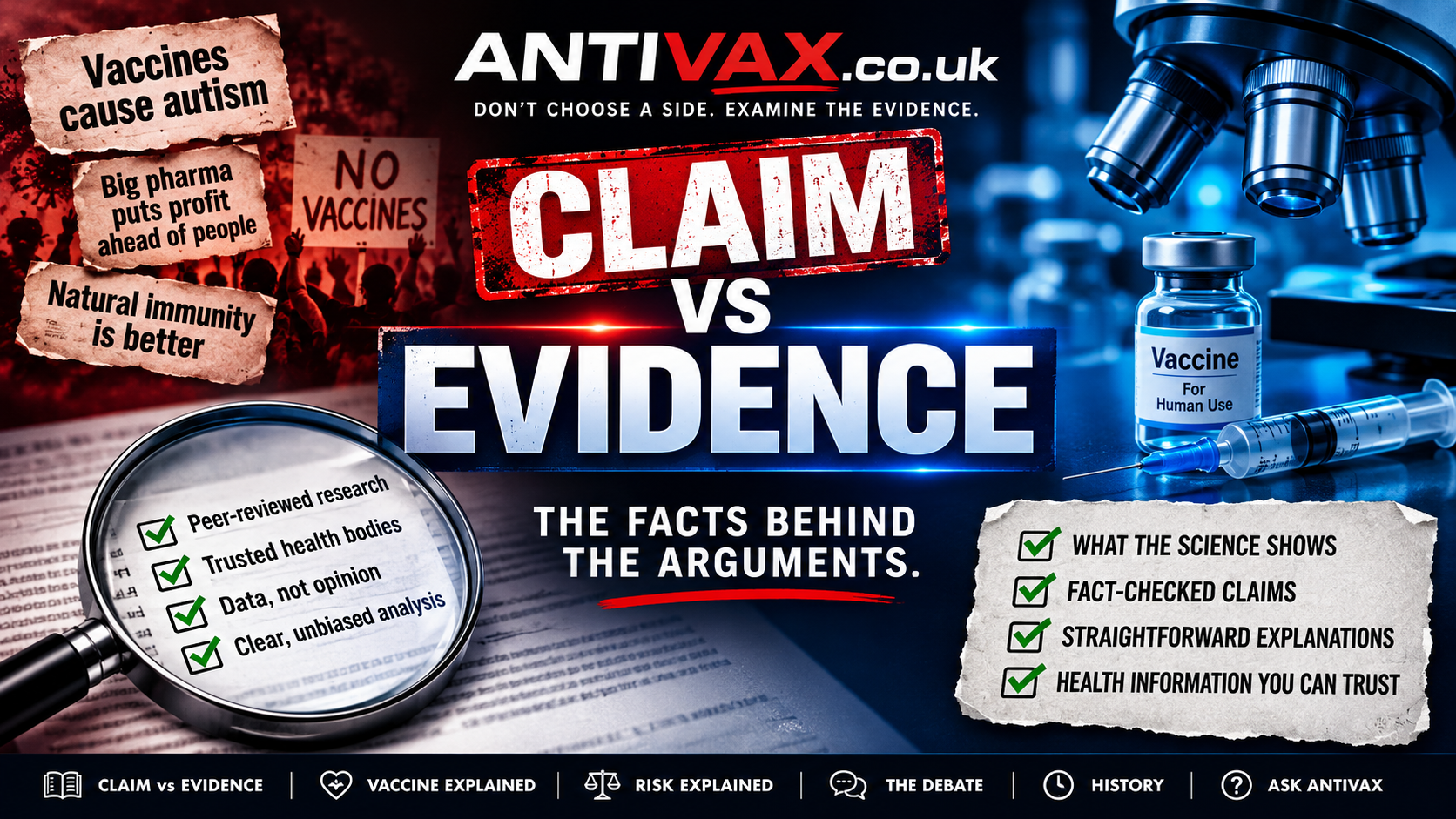
Search common vaccine claims and see the evidence status, context and deeper source trail.
Explore the Claim Library →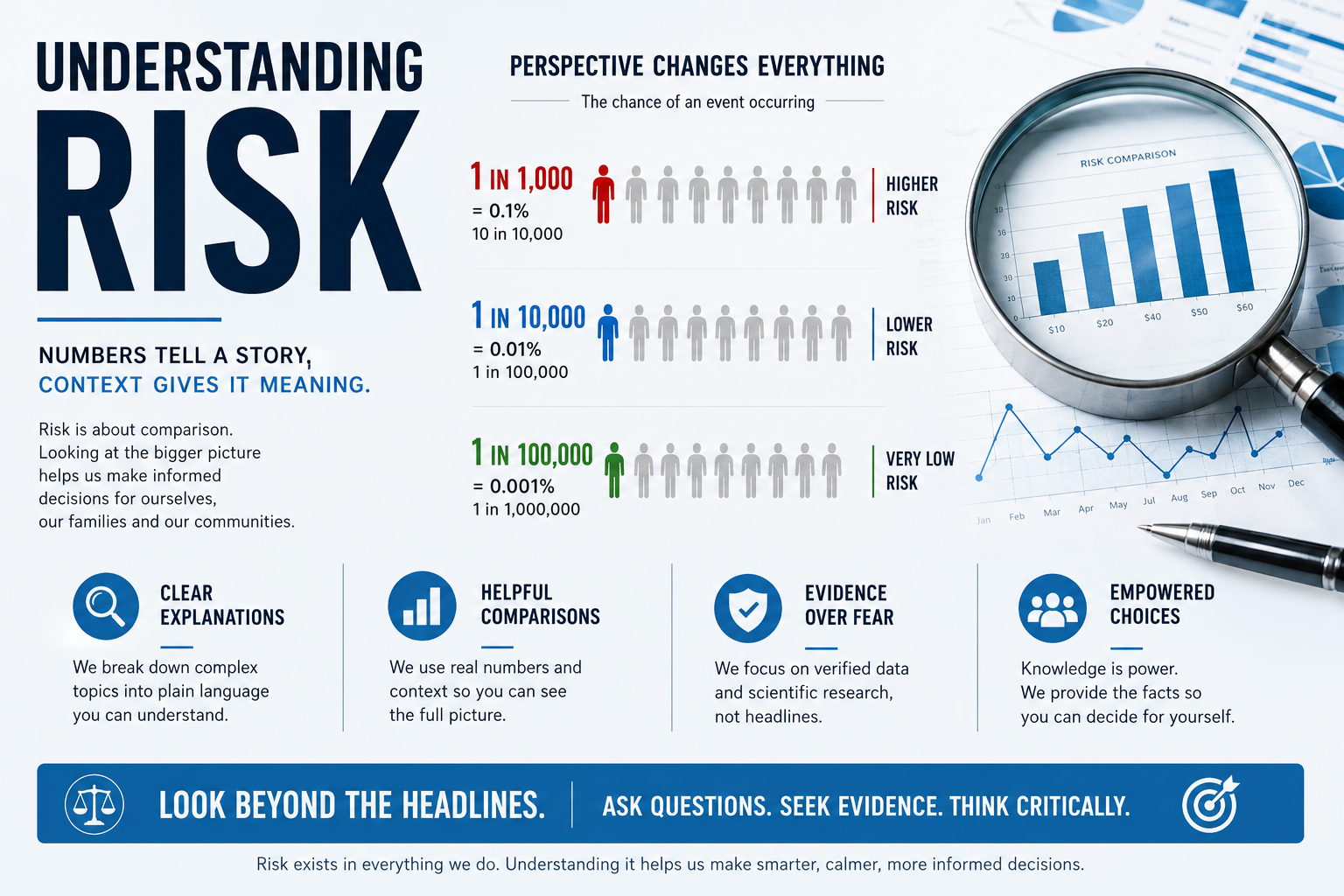
Learn the difference between adverse events, confirmed reactions, background rates and causation.
Understand vaccine risk →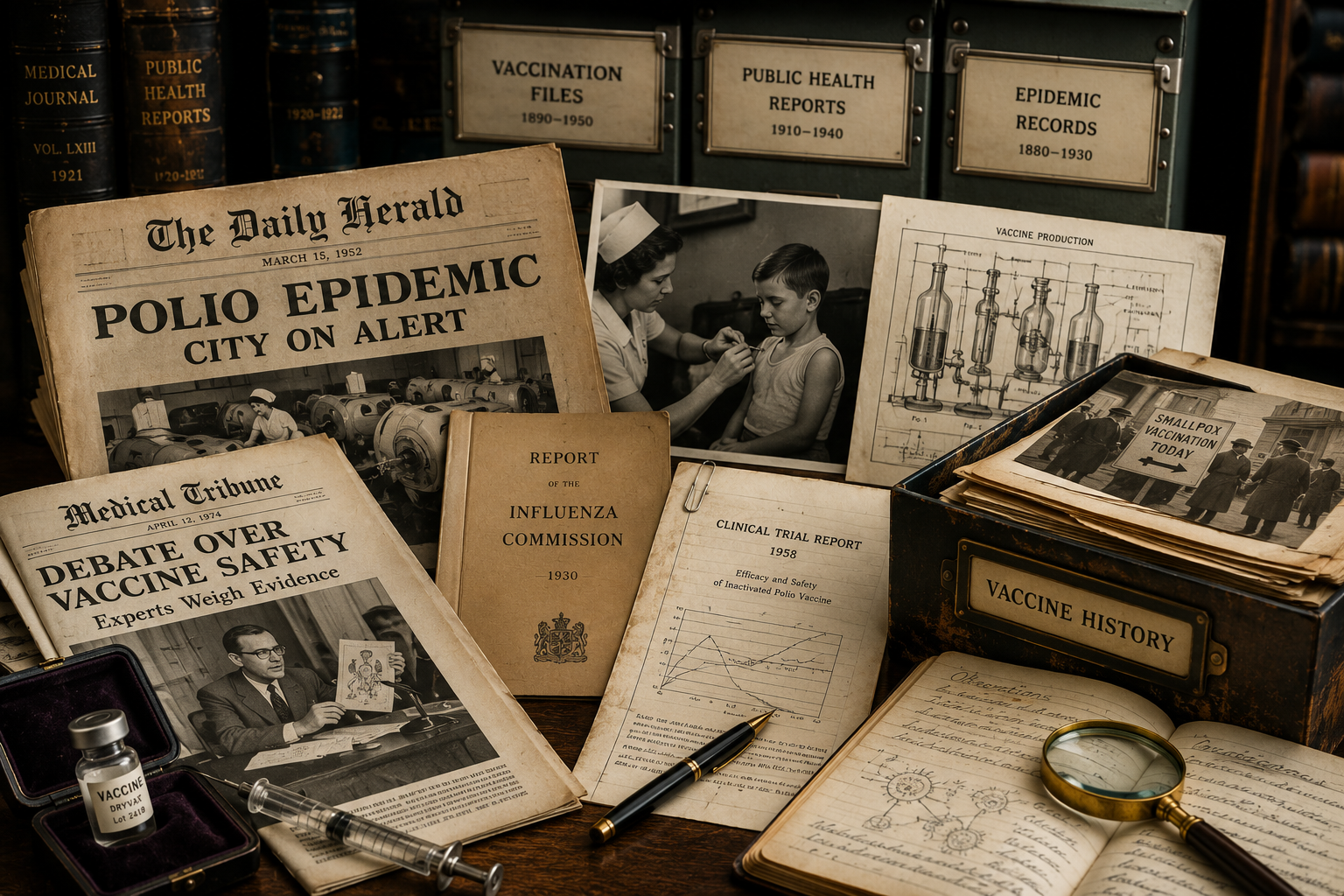
Follow major claims through time and compare the original controversy with later evidence.
Explore the Archive →Focused summaries and data-literacy guides that show the relevant source trail.
A structured look at effectiveness, common side effects, continuing safety surveillance and the evidence around infertility claims.
Read evidence review →How clinical trials, post-authorisation surveillance, safety signals and regulatory investigation fit together.
Read explainer →Why a suspected-reaction report is useful for detecting a possible signal, but does not by itself establish causation.
Read guide →For significant medical claims, the site prioritises systematic reviews and well-conducted meta-analyses, large well-designed studies, regulatory assessments and clinical or public-health guidance. Individual studies, spontaneous reports, case reports and anecdotes are considered in context rather than treated as equivalent forms of proof.
Where sources disagree, the aim is to describe the disagreement, study quality, limitations and uncertainty rather than select only the most striking conclusion.
Read the full Medical Evidence Review Policy →Search 20 claims about autism, MMR, aluminium, thiomersal, HPV, Yellow Card reports, vaccine safety and evidence interpretation. Each entry gives a concise evidence status and routes you to the deeper explanation.
Evidence Updates are dated summaries of newly published or newly reviewed source material already covered by the site. They record what the source says; publication here does not mean endorsement or that a final conclusion has been reached.
An update covering the announced allocation, including doses assigned to a Phase 3 trial and doses for frontline and health workers under current recommendations.
Read the update →A summary of WHO’s August 2026 position paper incorporating developments in typhoid disease burden and vaccination.
Read the update →A summary of the UK medicines regulator’s statement and its description of continuing safety surveillance.
Read the update →Newly tracked material includes the WHO and Africa CDC Ebola vaccine allocation, WHO’s updated typhoid vaccine position paper, the MHRA childhood-vaccine safety statement, and WHO/UNICEF coverage data.
See all August updates →How vaccine safety monitoring works
How to read Yellow Card reports
Vaccines and autism: what does the evidence show?
Understanding vaccine side-effect risk
Based on internal references across the current site, not visitor analytics.
The concept covers extended reports and source packs. Essential health and safety explainers remain free, and the current site does not take payment.
View the membership concept →Media enquiries, licensing information, corrections, citation guidance and quick-reference evidence packs.
Media & Research →Read the editorial philosophy, evidence standards, review status and approach to correction and commercial separation.
About ANTIVAX.co.uk →